 / Daily News…
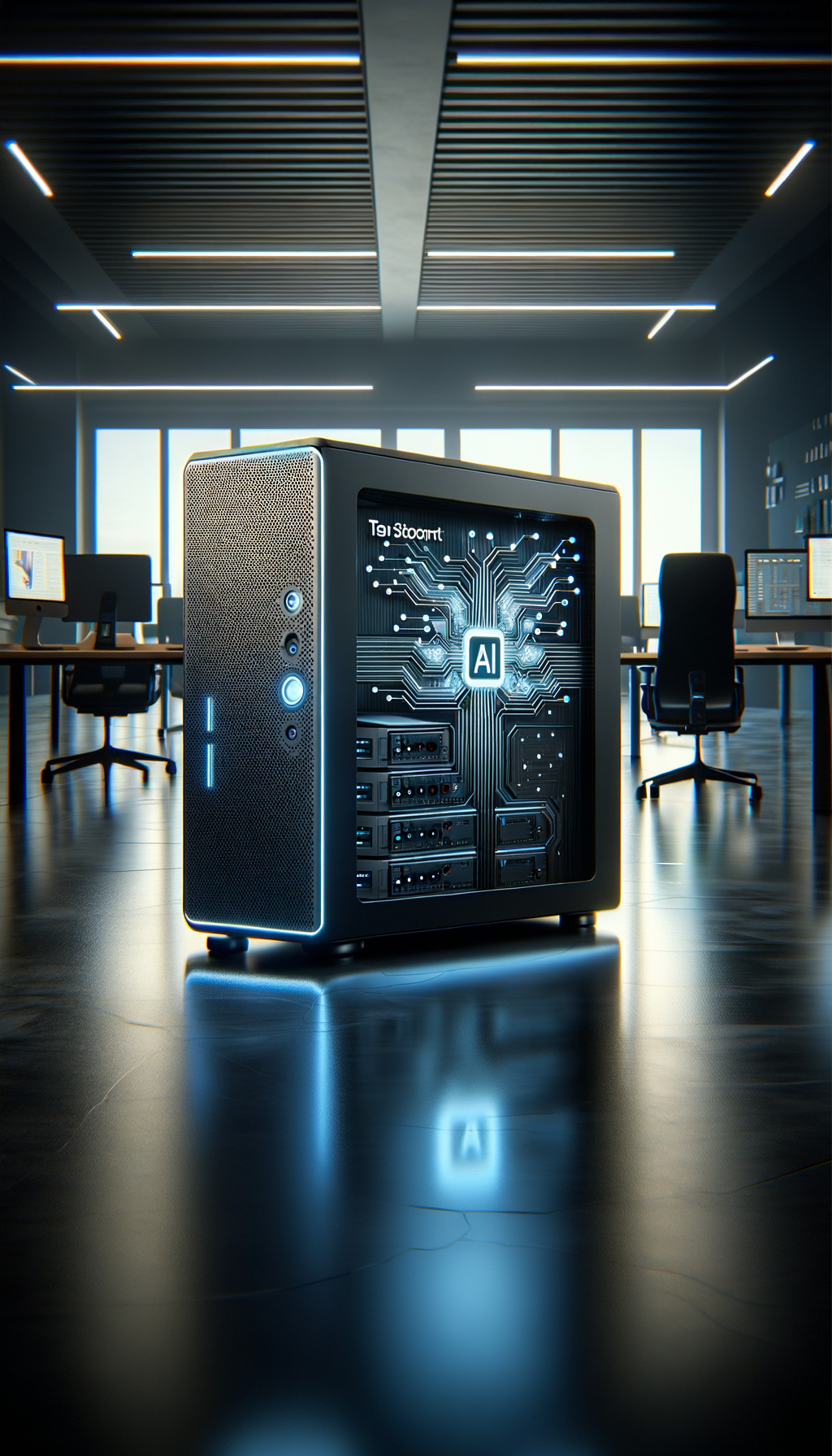
Tenstorrent may not be the first name that comes to mind for AI hardware, but its QuietBox is a bold entry into the market. Designed for developers looking to experiment with RISC-V-based accelerators, the QuietBox boasts impressive specs for its price range. It packs enough compute power to rival many traditional GPU setups, promising scalability to handle hefty models across multiple chips. However, the reality of deploying this power is hampered by an underdeveloped software ecosystem.
The QuietBox is built for performance, with its cooling design reminiscent of high-end gaming rigs. Yet, despite its powerful hardware, including four Blackhole P150 accelerators, the current software support limits its potential. Users might find it challenging to optimize the system for real-world AI tasks without additional development.
Optimizing for large-scale AI tasks, Tenstorrent equips the QuietBox with significant memory bandwidth and interconnect capacities. Its architecture aims to make scaling straightforward, but the software support needs to catch up to fully leverage these capabilities. Developers interested in pioneering this hardware will have to navigate a less intuitive setup compared to mainstream solutions from Nvidia or AMD.
For those willing to invest in the future of RISC-V AI infrastructure, the QuietBox presents an intriguing, albeit challenging, opportunity. Without polish and more comprehensive guides, harnessing its full power remains a hurdle. As Tenstorrent continues to build up its compiler and broadens support for AI models, the potential for this workstation could become more accessible.